
Cold Plunge and Sauna: Inside the Recovery Ritual
8 MIN READ
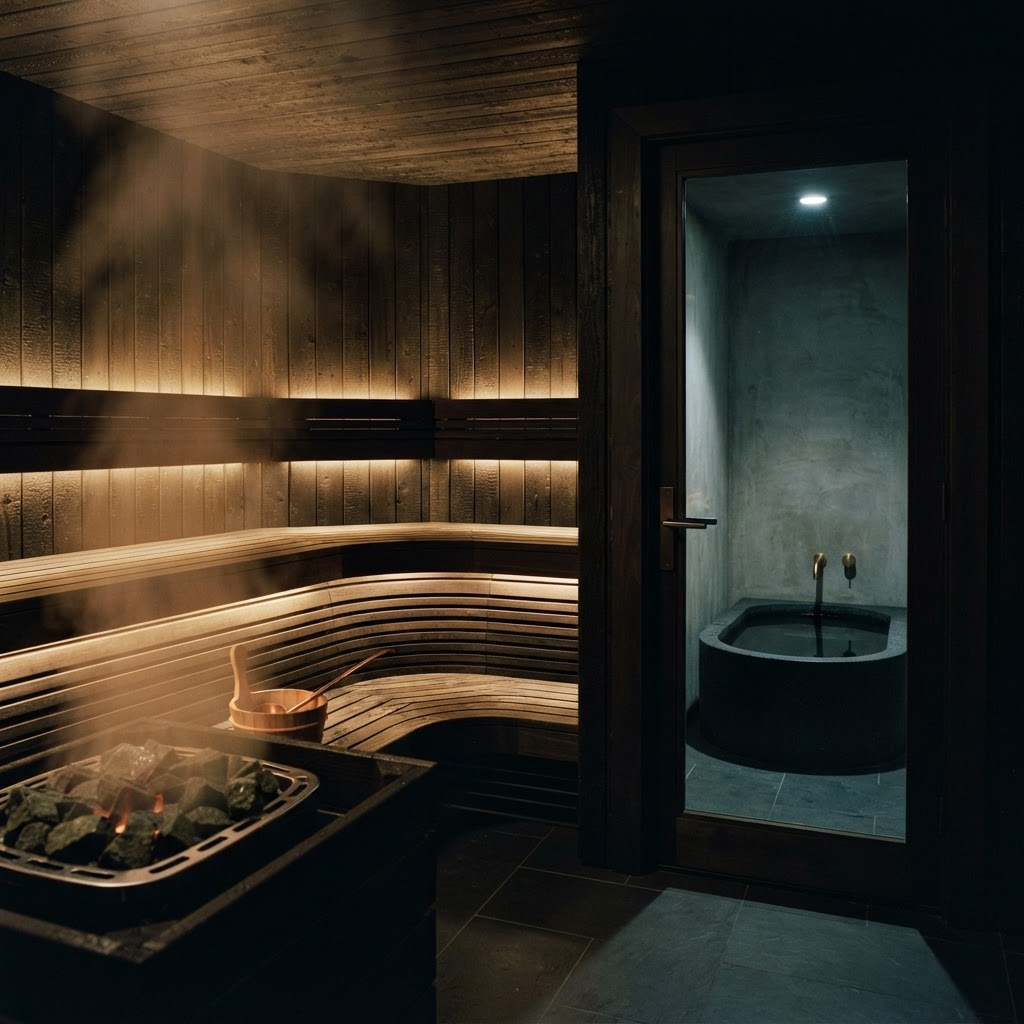
From Bathhouse Tradition to Backyard Fixture
Contrast therapy — heat followed by cold, repeated in cycles — has existed in Nordic and Japanese bathing culture for centuries. What's new is how far it's traveled: from public bathhouses to backyard cedar boxes and standalone plunge tubs, now a fixture of a certain kind of evening routine.
The modern version has been shaped almost as much by design and accessibility as by tradition. A decade ago, building contrast therapy into a home routine meant a serious construction project. Today, standalone plunge tubs and compact home saunas have turned what used to require a dedicated bathhouse into something that fits in a garage or a corner of a backyard.
A Cycle With a Clear Beginning and End
The appeal isn't purely physical. It's structural. A sauna-then-plunge cycle imposes a clear beginning and end on the day — heat to unwind, cold to reset, a defined stopping point that a scrolling evening rarely offers on its own.
That structure is arguably the real benefit: a ritual with a start and a finish, repeated often enough that the body starts to associate it with the close of the day rather than the middle of it. Unlike a passive activity like watching television, contrast therapy requires enough discomfort and attention that it's difficult to do while distracted — which may be part of why it's proven so sticky as a habit.
A typical routine runs in short cycles: several minutes of heat, followed by a much shorter cold exposure, repeated two or three times, finishing on cold. The specific numbers matter less than the consistency of doing the same cycle in the same order, session after session.
A Smaller Version of the Same Idea
The same idea shows up in smaller form with a VIP Rituals kratom gummy at the end of the night — a small, repeatable marker that the day is done, no cedar box required. Not every closing ritual needs specialized equipment; what it needs is repetition and a clear signal that the day has reached its end.
You don't need a plunge tub to build a closing ritual. See how VIP Rituals fits the end of the day.
Explore VIP RitualsFrequently Asked Questions
- What is contrast therapy and where does it come from?
- Contrast therapy alternates heat (typically a sauna) with cold exposure (a plunge or cold shower) in repeated cycles. It has roots in centuries-old Nordic and Japanese bathing traditions and has become popular as a home wellness routine in recent years.
- How long should a sauna and cold plunge cycle last?
- A common approach is several minutes of heat followed by a much shorter cold exposure, repeated two to three times and finishing on cold. Consistency of the cycle matters more than hitting exact time targets.
- Do I need a dedicated sauna and plunge tub at home to do this routine?
- No — compact home saunas and standalone plunge tubs have made this far more accessible than it used to be, but a hot shower followed by a brief cold shower can approximate the same structural ritual on a smaller scale.
- Why do people find cold plunge and sauna routines so habit-forming?
- The routine imposes a clear structural beginning and end on the evening, and the discomfort involved requires enough attention that it's hard to do passively — both of which help the habit stick more easily than purely passive wind-down activities.