
Inside the Member's Club: What Soho House and Zero Bond Get Right
8 MIN READ
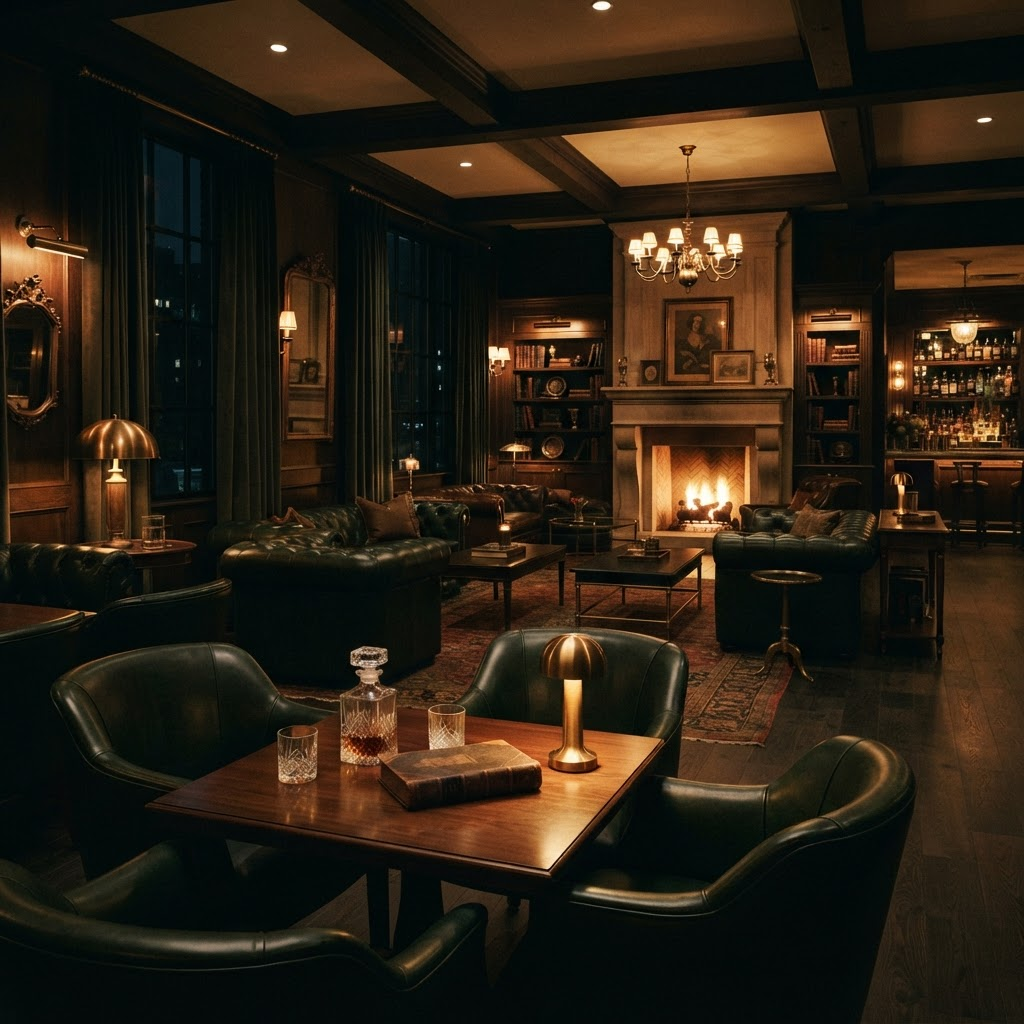
The Same Room, Every Time
Private members' clubs — Soho House, Zero Bond, and a long list of others — occupy a strange spot in the cultural conversation. Critics call them exclusionary. Members call them the only place they can actually get work done. Both are describing the same design decision: a room with a controlled guest list behaves differently than a room without one.
The value isn't the velvet rope. It's the predictability. A member's club is engineered so that the room, the service, and the crowd are consistent every time you walk in — a rare thing in a city that changes by the block, by the hour, by whichever influencer just posted about it.
That predictability is a design choice with real operational cost behind it — capped membership numbers, waitlists, and pricing calibrated specifically to keep a room from ever feeling unpredictable. The exclusivity isn't the point; it's the mechanism that produces the point.
Dues as a Certainty Tax
That consistency is what people are actually paying dues for: a known quantity in an unpredictable day. The same reason a regular orders the same drink at the same bar — not out of a lack of imagination, but because certainty is its own kind of luxury.
Think of membership dues less as a fee for access and more as a tax on uncertainty. You're paying, in advance, to remove the guesswork from an evening — will there be a seat, will it be quiet enough for a call, will the room feel the same as it did last time. For people whose days are already full of variables they can't control, that's a meaningful trade.
This is also why member's clubs tend to skew toward people managing high-variance schedules — founders, dealmakers, creatives with irregular hours — rather than people with predictable nine-to-fives. The value of a guaranteed constant scales with how few constants the rest of your day actually has.
A Small, Reliable Constant
We think about VIP Rituals the same way. A kratom gummy or shot that tastes the same, works into the same moment of your day, every time — a small, reliable constant, the way a good club or a good order at the bar becomes one.
The scale is different — a $10 gummy pouch is not a five-figure club membership — but the underlying value is the same instinct: in a day full of variables, a known, consistent quantity is worth building a habit around.
Consistency is the real luxury. It's why every VIP Rituals batch is made to the same standard.
Discover VIP RitualsFrequently Asked Questions
- What is the actual value of a private members' club membership?
- Consistency and predictability — a controlled guest list and capped capacity mean the room, service, and atmosphere stay the same visit after visit, which is difficult to guarantee at a public venue.
- Who typically benefits most from a member's club membership?
- People managing high-variance schedules — founders, dealmakers, and professionals with irregular hours — tend to get the most value, since a guaranteed constant matters more when the rest of the day has few constants.
- Are member's clubs only about exclusivity and status?
- Not primarily. The capped membership and waitlist exist to preserve a predictable environment, not simply to create scarcity for its own sake — exclusivity is the mechanism, not the product.
- How do member's clubs compare to hotel lounges or public co-working spaces?
- The main difference is guaranteed consistency. Public spaces can vary significantly day to day, while a capped-membership club is specifically designed to feel the same on every visit.